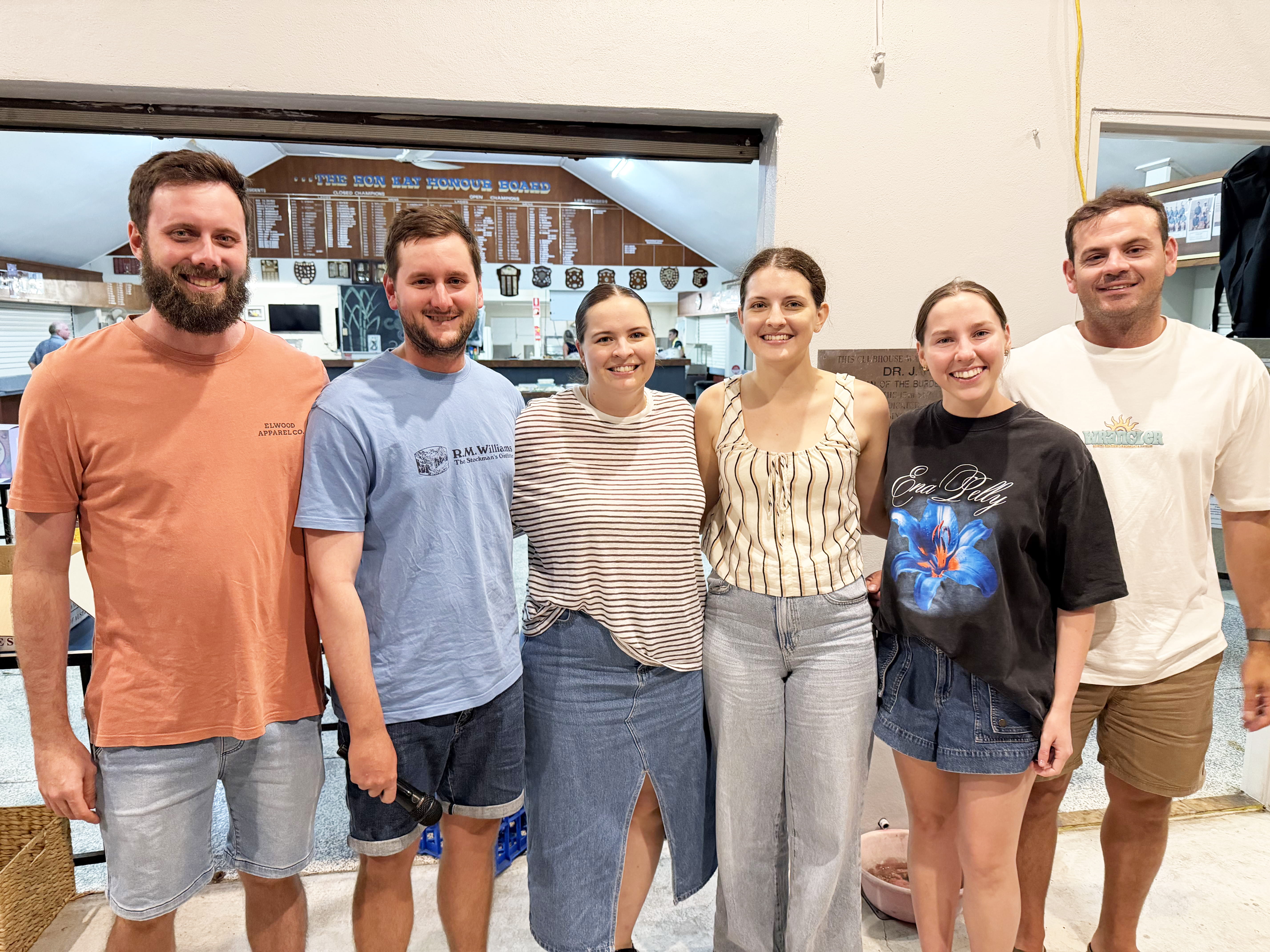
Stakeholders met at Burdekin Shire Council Chambers last week to discuss the local ramifications of the gillnet phase-out. Photo: Jacob CashaBurdekin seafood retailers, small businesses and consumers will be among the biggest losers when commercial fishers are forced to give up their gillnets on 30th June next year—and with a $9 million Government-backed research effort for viable replacements yet to come up trumps, fears for the industry are mounting. “If commercial net fishing ceases as planned … our business will be forced to close,” a local retailer said. GILLNET PHASE-OUT LEAVES BURDEKIN SEAFOOD FUTURE UNCERTAIN A gillnet ban scheduled for June next year could see Burdekin seafood supply, jobs, and livelihoods taken down with it, stakeholders have warned. Gillnets—vertical mesh netting walls used to entangle target species by their gills—have long been used by commercial fishers to target a range of species including barramundi, salmon and mullet. Now set to be phased out by the Queensland Government, local fishers fear a lack of commercially viable alternatives could render them jobless come next year's deadline, leaving Burdekin businesses and consumers without access to locally caught seafood. “At this stage, the net fishing is gone. We're saying we want an extension until [the Government] can replace it with something that's going to be equally as good. It’s that simple,” veteran Burdekin fisherman Neil Green said. The phase-out, announced in 2023, is part of Queensland's broader reforms to the east coast inshore fishery, with the Government citing concerns about interactions between gillnets and threatened and protected species. The transition has seen the commercial fleet reduced through a Government buyout program, with six Burdekin operators remaining under transitional NX arrangements until the fishery's scheduled expiry on 30th June next year. Meanwhile, a six-year, $9 million joint initiative between Queensland's Department of Primary Industries and the Fisheries Research and Development Corporation, known as Fish-LIGHT, is trialling alternative fishing gear as potential replacements for gillnets. But with next year's deadline looming, Burdekin fisher and Fish-LIGHT trial participant Cameron Pugh remains unconvinced of the alternative options being tested. “I don't think we've had a viable catch yet in the 18 months I've been doing it. Maybe one out of 20 times,” he said. “I trialled the fish traps—that was no go. I’m still currently trialing the trap nets, which they think are going to get us through, but I can't see it. Not as yet. “I don't think the alternative gear is going to cut it at all. If they bring that gear in, I won't be going for it. I'll be looking for another job.” Mr Green said net fishing accounts for about a third of local commercial fishers' income, with the remainder split between reef fishing and mud crabbing. “If you take the net fishery third away, the government would just be putting more effort onto another fishery, which is not needed,” he said. “It’ll have a huge impact—more for the next generation than for mine.” Local seafood retailers have also voiced concerns about becoming caught in the crossfire. Braddy's Quality Seafood in Ayr released a statement last month claiming the proposed changes would “force” the store, which employs three full-time workers, to shut its doors. “We specialise in supplying locally caught estuary fish, including barramundi, salmon, and mullet, to more than 300 local families each week,” the statement read. “If commercial net fishing ceases as planned … our business will no longer be viable and will be forced to close. This would not only remove an important source of fresh, locally caught seafood, but would also result in the loss of three full-time local jobs.” Melissa Wiles, owner of The Prawn Stop in Home Hill, added she would have to source products from as far as Brisbane if local suppliers were no longer available. “You can tell the difference straight away. Who wants to eat barramundi that's not local?” she said. “I’d have to up prices at least $10-15 a kilo just for the freight.” The phase-out came under renewed scrutiny late last month when stakeholders gathered at Burdekin Shire Council Chambers to discuss its potential ramifications. Among issues discussed was a $25,000 study—funded by local fishers—which challenged the findings of a Queensland Government ecological risk assessment that identified intermediate to high risks to threatened species including dugongs and turtles. The research, undertaken by independent fisheries consultancy FishListic, used data gathered by commercial fishers through onboard cameras, vessel monitoring systems and electronic catch reporting, including records of their catch and interactions with protected and non-target species. The assessment found the fishery could meet several Marine Stewardship Council sustainability standards, while identifying areas requiring further work before the remaining standards could be met. John Byers, a commercial fisher based at Alva Beach, said his experiences on the water largely concurred with the report's findings. “We’re under camera now, so everything’s open and transparent. There’s nowhere to hide,” he said. “I haven’t caught any dugongs. I've encountered turtles, but I've released them all alive. The camera footage speaks for itself.” However, conservation groups, including WWF-Australia and the Australian Marine Conservation Society, along with UNESCO assessments, have maintained that gillnet removal is non-negotiable to protect vulnerable dugong, turtle, and sawfish populations. That stance spurred a joint $160-plus million Federal and State policy package aimed at staving off an “In Danger” World Heritage status downgrade. The Queensland Government has confirmed the NX fishery will expire as legislated next year. Member for Burdekin Dale Last said the Government would only support changes backed by “robust science.” “The commercial fishing industry has a long history in the Burdekin as a valuable primary industry in our community, which is why I have continued to advocate on their behalf as the local member,” he said. “The Crisafulli Government has committed to supporting Queensland's fishing sector by only legislating changes backed by robust science, and fairly compensating all fishers for any changes required and we continue to deliver on that commitment.” Mr Last did not confirm whether he supported the phase-out proceeding as planned. Mr Green said requests for an extension to the NX fishery had been sent to Queensland Primary Industries Minister Tony Perrett. “I don't care what they come up with. They can come up with a fish pot—as long as it works,” Mr Green said. “That keeps us on the water. That keeps businesses happening—but if this stops in July, so does everything.” CAPTIONS: 1—Neil Green leads a stakeholder meeting at Burdekin Shire Council Chambers. Photos: Jacob Casha 2—The Prawn Stop owner Melissa Wiles with supplier John Byers Photos: Jacob Casha